Héctor Pérez – Microparaxes
Roots
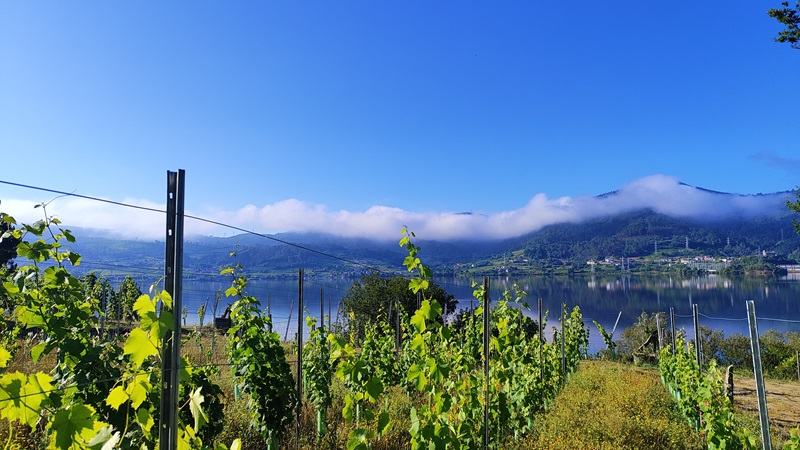
Our small winery was born from the memory of the land of Ribadavia, the historic heart of winemaking in Galicia since the Middle Ages. A region with a thousand-year-old winegrowing tradition, renowned for its wines long before the existence of modern appellation systems.
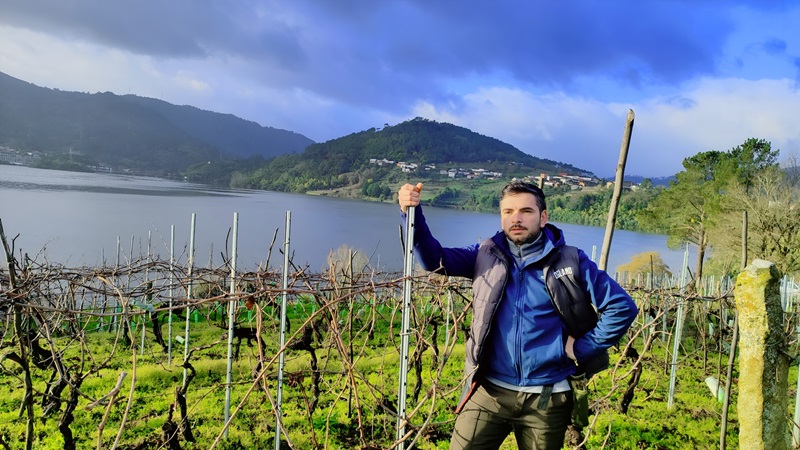
My name is Héctor Pérez, and I am a winegrower. An artisan who works the land beneath my feet and interprets the landscape through every bottle. I am the custodian of a family legacy that began with my great-grandfather and continues today in the very same small vineyard plots that my family has tended for generations.
My goal is not to produce a wine with a standardized flavour, but to accompany the grapes so they can express themselves as they truly are in each vintage. My work is based on respecting the vineyard ecosystem, giving particular importance to the soil as the source of balance and identity. I also recover traditional viticultural practices such as field blends, where different grape varieties are planted together, helping preserve the region’s genetic diversity.
In the winery, I follow a philosophy of minimal intervention, allowing the wine to speak for itself. Although this may appear to mean doing very little, it actually requires even greater precision, attention and discipline. The result is a limited, handcrafted production of honest, pure wines that seek no disguise—only to express the landscape from which they come and the person who crafts them.
Wines we produce
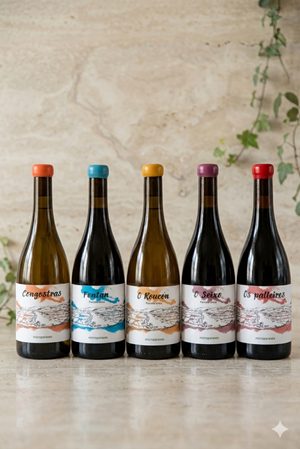
CONGOSTRAS (Vino de Concello)
Vineyards: Six small vineyard plots located in the municipality of Ribadavia, in the parishes of Ventosela and Francelos, on the slopes overlooking the Miño River.
Soils: Sábrego (decomposed granite), with a sandy loam texture.
Viticulture: Small family-owned vineyard plots with vines ranging from 12 to 74 years of age. The vineyards are managed with both natural and sown cover crops, maintained entirely by hand.
Winemaking: Spontaneous fermentation in clay amphorae and stainless steel tanks, followed by ageing on the lees.
O ROUCON (Parcela Única)
Varieties: Treixadura, Albariño and Godello.
Vineyard: O Roucón vineyard, located in the municipality of Ribadavia, parish of A Groba, on the right bank of the Miño River.
Soil: Red clay.
Viticulture: Mostly 35-year-old vines. Natural cover crops with all vineyard work carried out manually.
Winemaking: Spontaneous fermentation in French oak barrels and stainless steel tanks, followed by ageing on the lees.rmentación espontánea en barricas de roble francés y depósitos de acero inoxidable, seguida de una crianza sobre sus lías.
O SEIXO (Parcela Única)
Varieties: Ferrón, Espadeiro, Carabuñeira, Sousón, Brancellao, Garnacha, Caiño Bravo and Caiño Longo.
Vineyard: O Seixo vineyard, located in the municipality of Ribadavia, parish of Ventosela, on the right bank of the Miño River.
Soil: Sandy sábrego (decomposed granite).
Viticulture: Historic vineyard planted during the 1960s.
Winemaking: Spontaneous fermentation in stainless steel tanks, followed by spontaneous malolactic fermentation and ageing on the lees.
FONTAN (Parcela Única)
Varieties: Caiño Longo, Ferrón, Sousón, Brancellao and Carabuñeira (20% each).
Vineyard: Single vineyard, Fontán, located in the municipality of Ribadavia, parish of Ventosela, on the right bank of the Miño River.
Soil: Shallow sandy-loam sábrego (decomposed granite).
Viticulture: Two historic terraces restored in 2016. In 2017, the vineyard was replanted entirely with massal selections taken from the oldest local vines of each native variety.
Winemaking: Spontaneous fermentation in stainless steel tanks, followed by spontaneous malolactic fermentation and ageing on the lees.
OS PALLEIROS (Vino de Aldea)
Varieties: Gran Negro, Tinta da Zorra and Garnacha Tintorera.
Vineyards: Os Palleiros de Arriba and Os Palleiros de Abaixo, two historic vineyard terraces located in the municipality of Ribadavia, parish of Ventosela, on the right bank of the Miño River.
Soil: Shallow granitic sábrego, a sandy-loam decomposed granite soil.
Viticulture: Two small historic terraces documented in family records dating from before the 1930s.
Winemaking: Spontaneous fermentation in stainless steel tanks. Ageing in chestnut casks with spontaneous malolactic fermentation, followed by maturation on the lees.
Contact Héctor Pérez
Phone: 647904842
email: microparaxes@microparaxes.com
Social Media: Instagram @microparaxes